Address
Universe Star, Shangding Road, Zhengzhou, Henan
Email
[email protected]


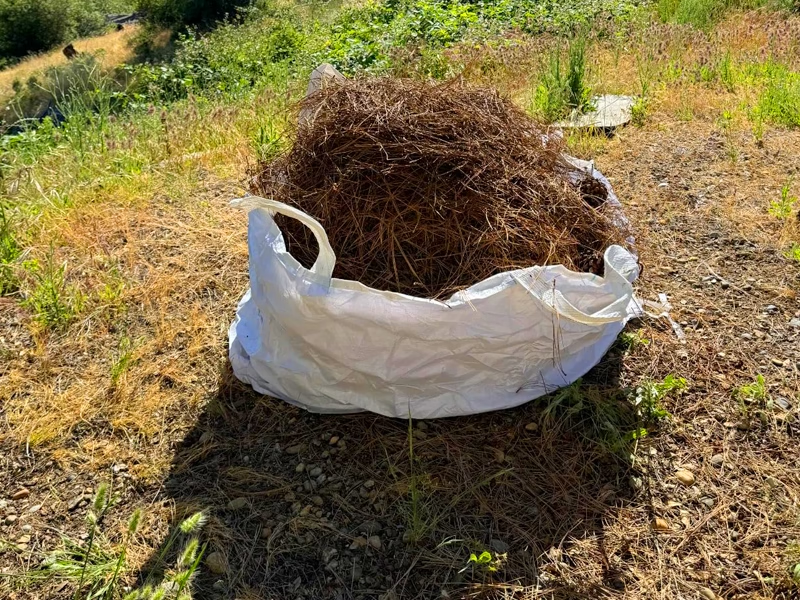
It hits every October across New England: entire neighborhoods ablaze with maple reds and oak golds, and suddenly those same beautiful leaves become a weekend-swallowing chore. For decades, suburban warriors have wrestled with paper yard bags that dissolve in the rain, or plastic bins that fill up too fast and weigh a ton. Lately, though, a quiet revolution has been unfolding in driveways from Michigan to Colorado—where construction-grade FIBC bags are becoming as common as rakes and leaf blowers.
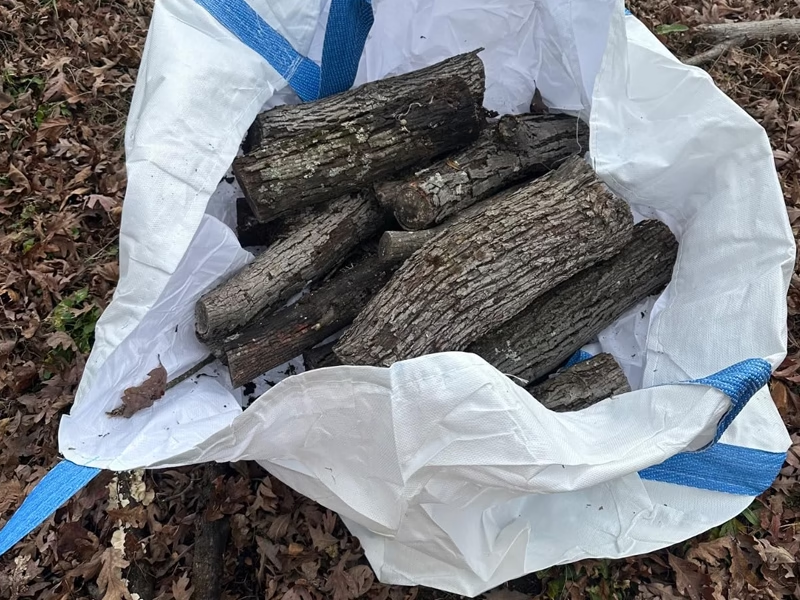
FIBC stands for Flexible Intermediate Bulk Container, but you’ll hear them called “super sacks” or “builder’s bags.” These industrial workhorses—woven from polypropylene fabric—were designed to haul sand, chemicals, and agricultural feed. Yet their specs read like a homeowner’s wish list: capacity for 2,000+ pounds, waterproof coatings, tear resistance, and the ability to fold flat when empty. Originally built for factories, they’ve found an unexpected second life in residential yard work.
Traditional cleanup methods each carry their own baggage:
A standard 85×85×85cm super sack holds what 15-20 paper bags struggle to contain. Whether you’re dealing with a single oak’s leaf drop or post-storm branches, you fill it once instead of making a dozen trips. On a typical half-acre lot, that slashes dump runs from 12 down to 2.
The woven polypropylene shrugs off punctures from twigs and won’t flinch at wet, rotting leaves. Users in Seattle report that even after three days of Pacific Northwest rain, these bags keep their integrity—no blowouts, no mysterious trails of compost leaking down the driveway.
Four corner lift loops let you hook them to small forklifts, engine hoists, or even a sturdy garden tractor. Lawn Care Plus in Fort Collins takes it further: they position bags under leaf blowers, fill from the bottom up, then winch the whole loaded sack onto their truck—no shoveling required.
Folded flat, a stack of five takes up less space than a single empty trash bin. Pop them in a garage corner or hang them on a wall hook. Compare that to rigid bins that eat up square footage whether you’re using them or not.
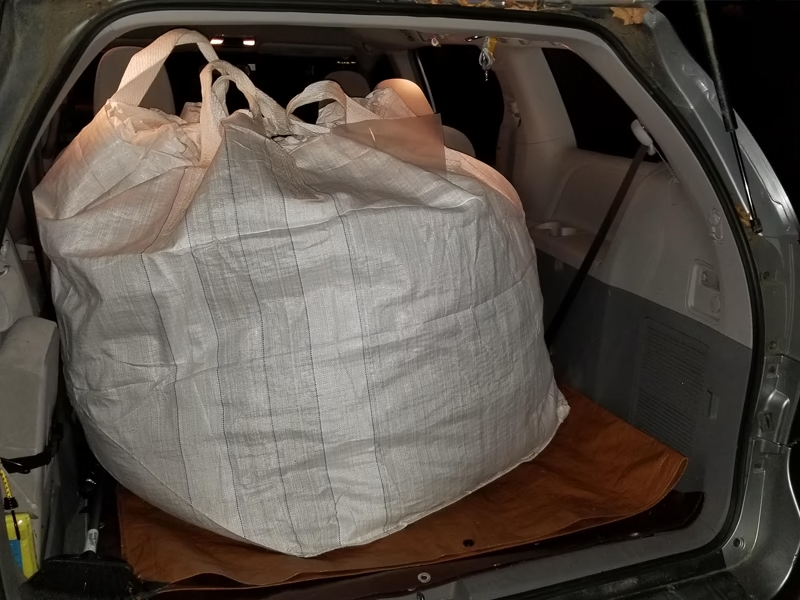
Here’s the game-changer for weekend warriors: collapsed FIBC bags slide right into a crossover’s cargo area. Jim from Sacramento keeps three in his Subaru Outback—drives to his cabin, unfolds them, fills with pine needles and brush, then hauls directly to the county green waste site without transferring loads or worrying about spills en route. For anyone juggling multiple properties or rural land, it’s “grab-and-go” yard work.
At $5-7 per bag (reusable for 30+ cycles) versus $0.50 per paper bag that tears after one use, the break-even point arrives by mid-season. An Ohio family calculated their three-year cost: roughly $2 annually versus $50 spent on disposable bags each fall.
What Actually Works:
Check Before You Go All-In:
Beyond the convenience, FIBC bags tick sustainability boxes. Reusing the same sack for three years eliminates dozens of single-use bags from the waste stream. California’s Share Waste program pilots a circular model: drop full bags at community compost hubs, get empties back sanitized and ready for the next round. Manufacturers now offer versions made from recycled PP, closing the loop further.

Super sacks have made a curious journey from hauling concrete to corralling maple leaves. More than just a tool swap, they represent a distinctly American impulse: practical problem-solving that doesn’t sacrifice efficiency for eco-consciousness. This fall, maybe it’s time to give your yard work an industrial upgrade. After all, weekends are better spent enjoying the view—not fighting the bag that holds it.